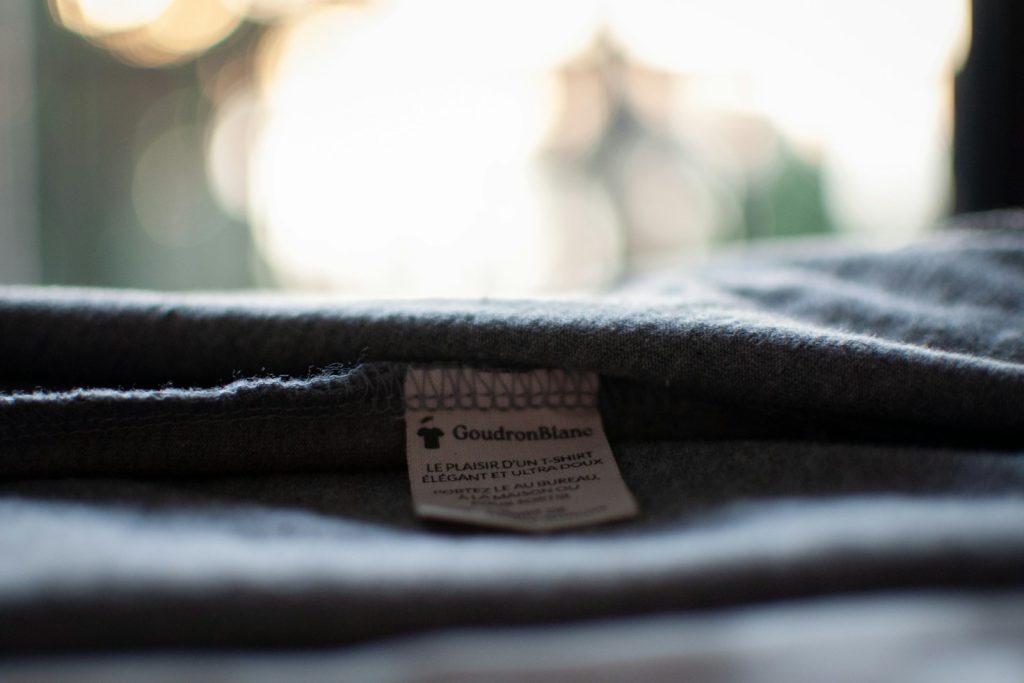
Clothing labels in Canada follow specific rules. Knowing what they tell you helps you shop smarter and wash better.
Quick take
- Under Canada’s textile labelling rules, fibre content is shown as percentages by mass, using generic fibre names.
- Fibre content information must generally be bilingual, in English and French.
- Labels identify the dealer by name and address or by a CA number issued by the Competition Bureau.
- Care labelling is voluntary in Canada, but any care instructions given must be accurate.
The small label in your clothing carries information that’s regulated in Canada. Here’s what to look for.
What fibre content labels show
According to the Competition Bureau’s guide to the textile labelling regulations:
| Information | What it means |
|---|---|
| Fibre content | Percentages by mass, such as “60% cotton, 40% polyester” |
| Generic fibre names | Standard names such as cotton, wool, polyester and viscose, not brand names alone |
| Order | Usually listed from the largest share to the smallest |
| Language | Fibre information generally in both English and French |
| Dealer identity | The dealer’s name and postal address, or a CA number |
Fibres making up less than 5% may be named or grouped as “other fibre.”
Care labels are voluntary
Unlike fibre content, care labelling is voluntary in Canada. Many manufacturers follow the national standard for care labelling, which uses symbols, but they don’t have to include care information at all. When they do, it must accurately reflect an appropriate method of care.
Reading care symbols
| Symbol | Meaning |
|---|---|
| Washtub | Washing; dots or a number show temperature |
| Triangle | Bleaching; a crossed-out triangle means do not bleach |
| Square with a circle | Tumble drying; dots show heat level |
| Iron | Ironing; dots show temperature |
| Circle | Professional cleaning, such as dry cleaning |
A cross through any symbol means “do not.”
Style tip
Take a photo of the care label when you buy something new. If the label fades or itches and you cut it out, you’ll still have the instructions.
Using labels when you shop
Fibre content tells you a lot about how a piece will feel and wear. Wool and wool blends are warm for winter; cotton and linen breathe in summer; polyester and nylon are durable and quick-drying. Our guides to layering for cold weather and dressing for hot weather explain which fabrics suit each season.
Keep this in mind
Quebec has additional French-language requirements for products sold there. If you sell clothing in Canada, check the full regulations rather than relying on a summary.
Wash with confidence
When in doubt, wash on a cold, gentle cycle and air-dry. It’s the safest default for most clothes, especially pieces without a care label.
Your style questions
What is a CA number?
It’s an identification number a Canadian dealer can get from the Competition Bureau and use on labels instead of their full name and address.
Do all clothes have care labels?
No. Care labelling is voluntary in Canada, although most manufacturers include care information. When it’s there, it must not be false or misleading.
What do the dots on care symbols mean?
On washing, drying and ironing symbols, dots usually indicate temperature: more dots mean a higher temperature.